

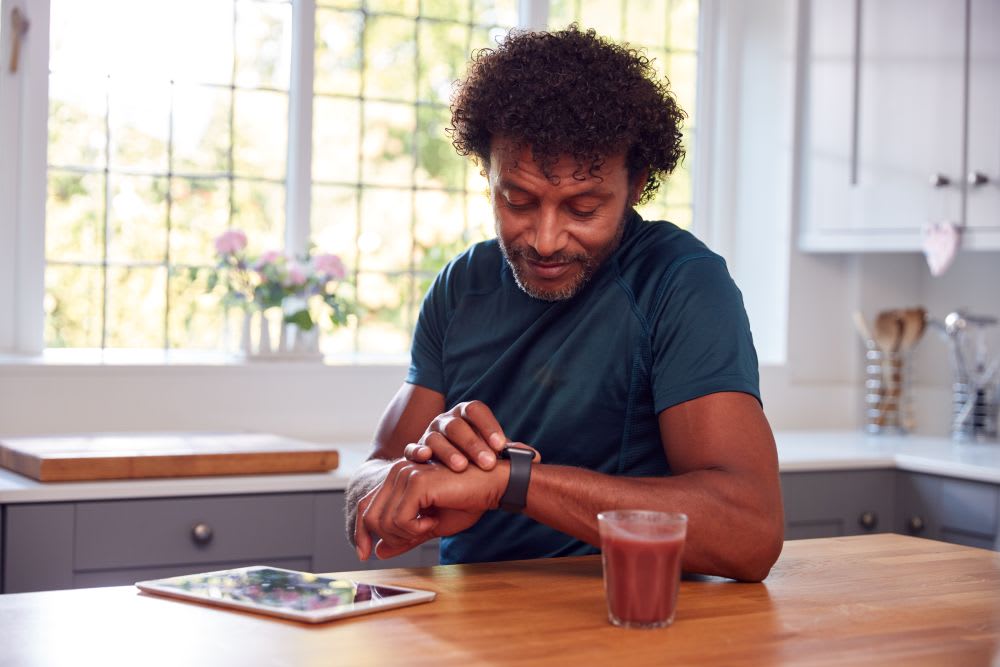
A lot has changed when it comes to our fitness essentials. Gone are the days of gym bags packed with just shoes and a change of clothes; welcome to the era of 24/7 health tracking.
Nearly two decades after the first Fitbit made it easier than ever to monitor our step count, there are no signs of the trend slowing down. In 2025, Americans spent 88% more on fitness wearables than the year before.
Whether you’re new to the market or are a seasoned vet looking to try a different device, you have a seemingly endless variety to choose from. As a clinical exercise physiologist at Stamford Health, I help patients in our bariatric or cardiac rehabilitation program develop a fitness routine that works for them. When you’re shopping for a wearable tracker, you too should consider your lifestyle and goals.
Steps, heart rate, sleep quality, and even electrocardiograms are just a few of the data points that the trending tech tracks. But the best wearable for you depends on what motivates you.
But if you’re in search of a device that can be worn out of plain sight, try a Whoop. In addition to its standard wristband, it can also be placed in specifically made clothing or on a bicep band for under long sleeves or for sports that require wrist straps or gloves.
Other tech goes more in-depth with performance data such as detailed pace, elevation, training load balancing, adaptive coaching, route guidance and estimated VO2 max, respectively.
If you’re more interested in recovery information, look for options that monitor sleep quality/stages, body temp, heart rate variability, and prior day’s physical activity to estimate readiness.
Some, like watches by Apple and Samsung, even have capabilities to perform ECG, measure oxygen saturation, respiratory rate and to detect falls.
Just like with exercise, there is no one option that fits all. It’s more about finding the one that fits your fitness goals. And even with a flood of data about your movement, remember that the devices are there for motivation and accountability. When people see their habits, they’re more likely to change them.
The best fitness tracker isn’t the most advanced — it’s the one that fits seamlessly into your daily routine.
Nearly two decades after the first Fitbit made it easier than ever to monitor our step count, there are no signs of the trend slowing down. In 2025, Americans spent 88% more on fitness wearables than the year before.
Whether you’re new to the market or are a seasoned vet looking to try a different device, you have a seemingly endless variety to choose from. As a clinical exercise physiologist at Stamford Health, I help patients in our bariatric or cardiac rehabilitation program develop a fitness routine that works for them. When you’re shopping for a wearable tracker, you too should consider your lifestyle and goals.
Steps, heart rate, sleep quality, and even electrocardiograms are just a few of the data points that the trending tech tracks. But the best wearable for you depends on what motivates you.
Watch Or Ring Or Strap, Oh My!
The explosion of the fitness tracking market brings even more designs and styles. Companies like Apple and Garmin offer reliable tracking with fashionable watches. Oura’s discreet tracker ring is a popular alternative to a wrist device.But if you’re in search of a device that can be worn out of plain sight, try a Whoop. In addition to its standard wristband, it can also be placed in specifically made clothing or on a bicep band for under long sleeves or for sports that require wrist straps or gloves.
All About That Data
Consider, too, what kind of data you’re looking for. There are devices, like the FitBit Inspire 3, that track the basics of steps, heart rate, and floors climbed.Other tech goes more in-depth with performance data such as detailed pace, elevation, training load balancing, adaptive coaching, route guidance and estimated VO2 max, respectively.
If you’re more interested in recovery information, look for options that monitor sleep quality/stages, body temp, heart rate variability, and prior day’s physical activity to estimate readiness.
Some, like watches by Apple and Samsung, even have capabilities to perform ECG, measure oxygen saturation, respiratory rate and to detect falls.
Just like with exercise, there is no one option that fits all. It’s more about finding the one that fits your fitness goals. And even with a flood of data about your movement, remember that the devices are there for motivation and accountability. When people see their habits, they’re more likely to change them.
The best fitness tracker isn’t the most advanced — it’s the one that fits seamlessly into your daily routine.